

OVERVIEW
Gambit is a synchronous, head-to-head card battler game where players summon minions and cast spells to battle in real-time. Players battle to win coins, which can be used to open card packs for new cards to use in their battle decks. The target demographic of the product was collectible card game players who wanted the depth and customization of a digital collectible card game with the short battle times and accessibility of a mobile game.
GOALS
-
Create an engaging card battle experience that is approachable for casual players, with a deeper strategy for mid-core players.
-
Entice players with a lively and compelling card battle experience.
-
Launch a minimum viable product to prove out unique gameplay concepts.
RESEARCH
Gambit was heavily influenced by standout hits like Clash Royale and Hearthstone, which had proven there was an appetite for mobile games to have deeper elements of competition and strategy. It was important to understand player expectations and motivations across these game types.
Collaborating with our research team, a market analysis was done that helped us identify the top motivators of three different segments of players:
-
Clash Royale players – most interested in 2v2, increasing their rank, and real-time multiplayer battling.
-
CCG players – driven to their favorite games for deck building and turn-based strategy.
-
Crossover players (both Clash Royale and one or more CCG titles) – most motivated by real-time multiplayer battling as well as progressing through single-play story content.
Equipped with this information, I conducted an in-depth analysis of the highest-rated games from these player segments, paying particularly close attention to their approaches to battle pacing, visual cues, card mechanics, and card management.

THE BATTLE EXPERIENCE
Working closely with a game designer, art director and developers, our skunkworks team crafted a lively battle experience that challenged us to properly communicate card abilities and spells so players could successfully respond to attacks from their opponents.
BATTLE SCREEN
Working with game design requirements, I wireframed many different layout options for the battle screen.


The biggest dividing factor for the team were these asymmetrical and symmetrical avatar layouts:


Asymmetrical avatars created nice lines for the eyes to follow down the screen but weren't quite as clear about which avatar belonged to the player.
Symmetrical avatars better reinforced the head-to-head feeling of the battle experience and were clearer about which avatar was the player's.
LANES & TIMERS
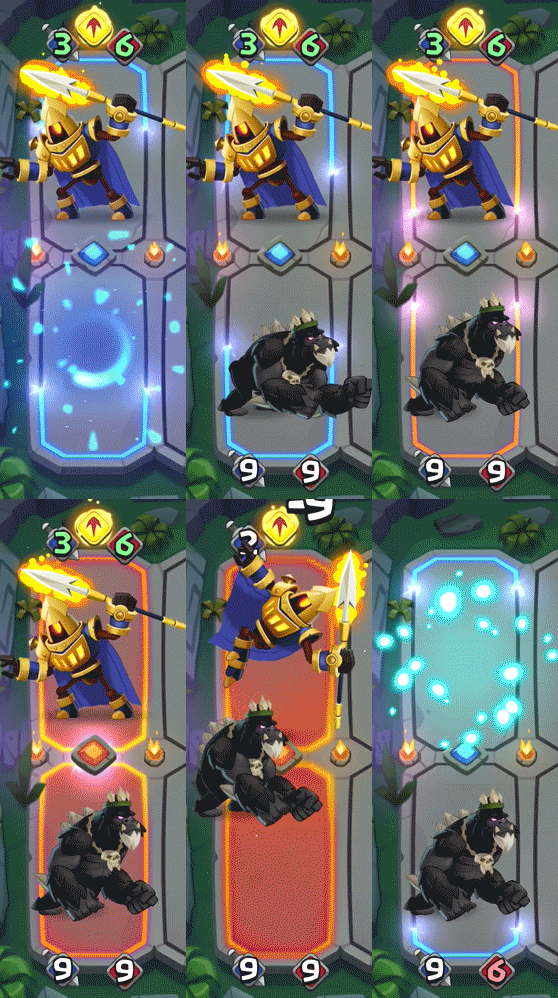
Lane borders served as timers for when attacks would be exchanged. They built anticipation for upcoming attacks while creating a sense of urgency. Staggering attack animations between player and opponent minions afforded players more opportunity to grasp combat results.


*Lane and character artwork done by art team.
To hide latency, all cards took one second to cast. When cards were played in a lane with an attack timer below 4 seconds, the timer would jump back to afford their opponent a chance to respond. The charging gem animation indicated that there was only 1 second left on an attack timer, and any card played would not successfully block an opponent's attack. This behavior, although intended to promote fair play, unfortunately introduced a lot of complexities when spells with travel time were later added into the game.
MANA BAR
The mana bar was designed to be prominently placed near the player's hand, so quick comparisons of mana count to card cost could be made. Extra flairs were added to accentuate when an additional mana had been accrued. If a player allowed their mana bar to completely fill, the text label and gems would flash red with accompanying marquee animations to warn them of excessive mana drain.


CARDS & ICONOGRAPHY
Designing the cards was a very iterative process. Establishing a clear information hierarchy helped determine the way we approached card art, icons for stats, special abilities, rarity, and faction across all cards.

Exploring shape language and layout for stats icons, card descriptions, and card art. These wireframes were made before the concept of faction and rarity were introduced.

Experimenting with different ways of communicating faction and rarity on cards.


During battles, simplified cards would be featured in player hands to avoid information overload. However, they would feature special ability iconography as that information would be pertinent in battle. If players wanted more information about each card, tapping and holding simplified cards or the minions in lanes would display the expanded version of the card.
*Card and iconography styling done in collaboration with art team.
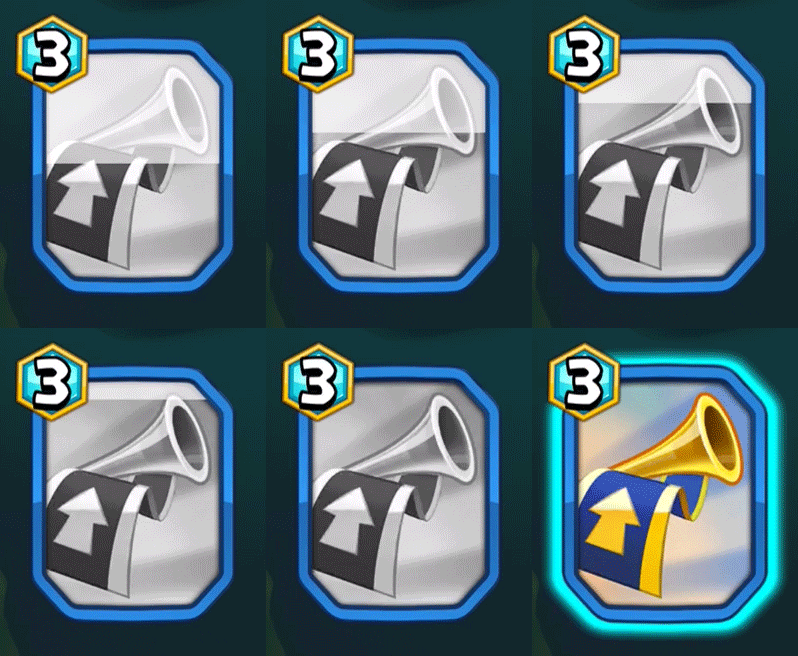
The status of cards needed to be clear and intuitive so players could quickly react to their opponent's plays. If a player couldn't afford a card, its portrait would be greyed out until enough mana was accrued.
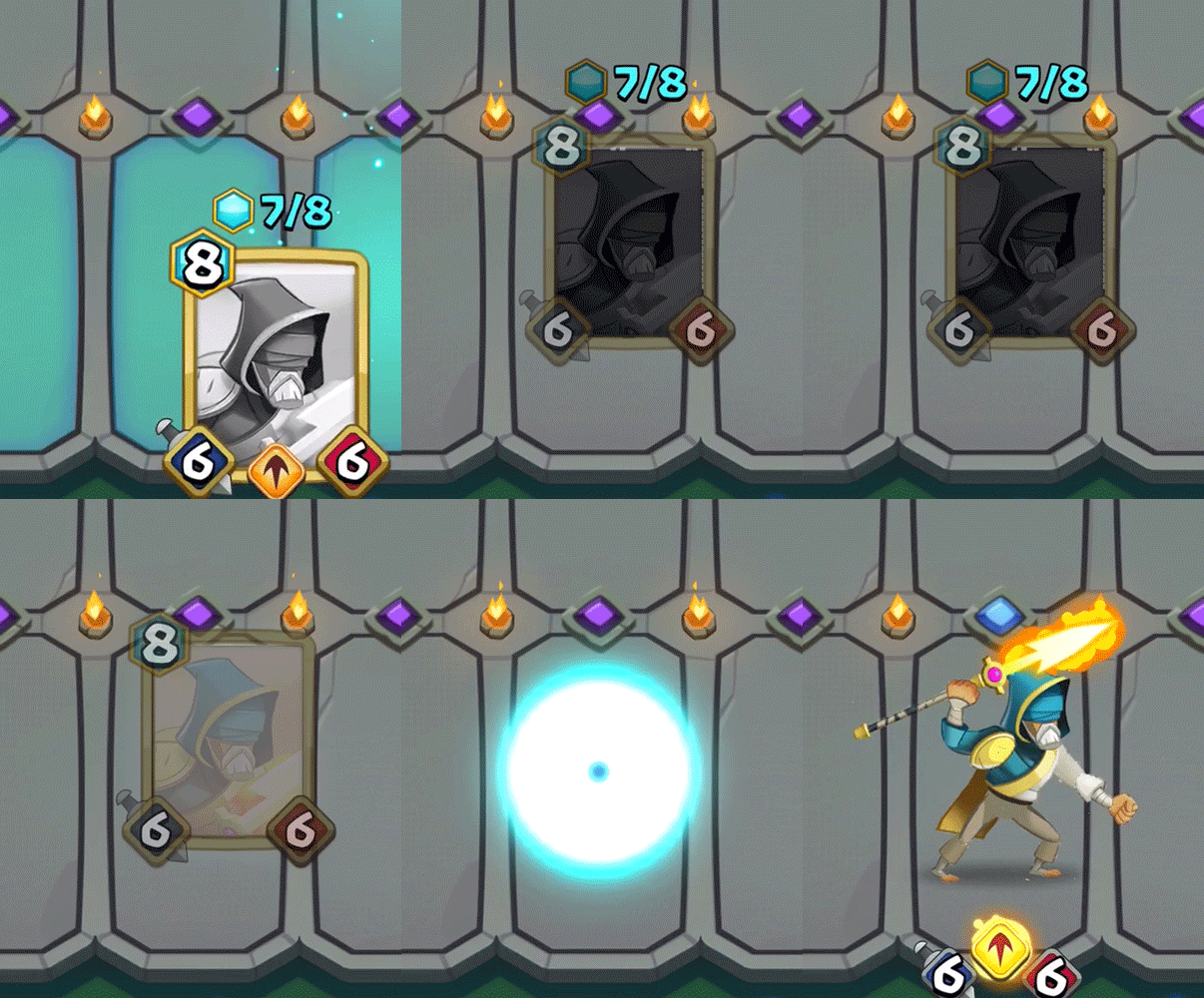
If cards were dragged and dropped into a lane prematurely, a grace period was designed to allow the card to "queue" instead of snapping back into the player's hand, requiring them to drag the card a second time and potentially missing plays.

VALIDATION
A playtest study was held to identify any friction points with an early build of the game. The playtest also gathered insights about player comprehension of battle mechanics, cognitive load, strategic depth, and pacing.
-
Players felt they were unable to develop deep levels of understanding and strategy because the game was too fast initially as they were still learning the mechanics.
-
The limitations of human working memory, especially under pressure, lead to frustrating player experiences that would potentially churn novice or less resilient players.
ONBOARDING
INITIAL APPROACH
To properly teach battle mechanics and eliminate player frustration, our game designer and I worked closely together to create an onboarding experience that would provide a low-stakes environment for players to learn in. Players would complete a series of battles against an AI opponent that would gradually increase in difficulty. There was an external preference to maintain a "sandbox" feel instead of a sequence of scripted instruction.
This assumed players would primarily discover and learn mechanics through repetitive play.
FINDINGS
Another playtest study was conducted to determine the onboarding's efficacy. Unsurprisingly, it did not properly prepare players to be successful at the game, and certain player segments had a difficult time understanding core mechanics. The main friction points were:
-
Players had several issues with understanding mana, lane timers, and card abilities.
-
Many players were unable to figure out their desired action after they encountered corrective text.
-
A small group of players got held up on dialogues because they didn't know they needed to tap to proceed.
ITERATIONS
Given the results of the playtest, the approach shifted to adding more explicit instruction upfront before letting players enter into a real-time battle. Our game designer made tuning changes to AI difficulty that further de-risked the tutorial battles, and I added additional instructional UI elements.


Later iterations of the onboarding experience would include instructional moments integrated into card pack purchasing/opening and deck creation/management.

FINAL SCREENS
A culmination of the card battle experience and other first-pass meta features that were created for launch.


*UI styling done in collaboration with art team.
THE RESULTS
Gambit was successfully launched on the iOS and GooglePlay app stores in February 2019. It amassed a vibrant community on Discord that shared deck configurations, strategies, and an overall enthusiasm for the game.
Although there was still a lot to be done to improve usability and breadth of content, the acquisition of our studio changed high-level studio direction, so Gambit would no longer be invested in. Despite this, and without any user acquisition or marketing whatsoever, Gambit was able to accomplish:

3,000
PEAK DAU

16,000
ORGANIC
INSTALLS

Generated excitement and engagement among our target audience
